Dogdragons
Imperial
& New Imperial info, links & photo's
 1887 The history of New Imperial, founded by Norman
Duckwood Downes, goes back to the early days of the bicycle industry in
Birmingham. From 1887 Imperial made bicycle fittings and, later, complete
bicycles, possibly after he bought the ailing bicycle business of Hearl
and Tonks (founded 1892).
1887 The history of New Imperial, founded by Norman
Duckwood Downes, goes back to the early days of the bicycle industry in
Birmingham. From 1887 Imperial made bicycle fittings and, later, complete
bicycles, possibly after he bought the ailing bicycle business of Hearl
and Tonks (founded 1892).
Imperial were motorcycles produced between 1901
and 1903, by Norman Downs in Birmingham.
1901 Having already been established in the bicycle
trade, Downs entered the powered market at the Stanley Show.
A model was exhibited that had a 3.5hp
engine mounted above the front wheel which it drove by belt. Only one machine
was sold and all the others were used by staff.
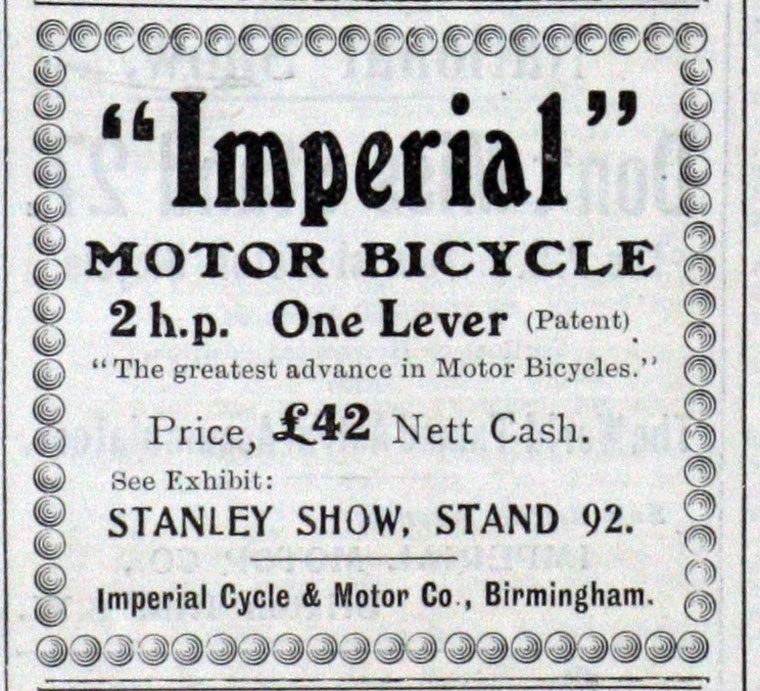
1902 At the show they had a 2hp model.
1903 Imperial went back to bicycle manufacture. |
1902
|
1910 began the production of a machine using
a 293cc JAP engine.
1912 Registration of New Imperial Motors
is recorded, and they offered a range of three motorcycles. Downs made
his return with the revised name of New Imperial and based his company
in Loveday Street, Birmingham.
He started with three models all using
JAP engines.
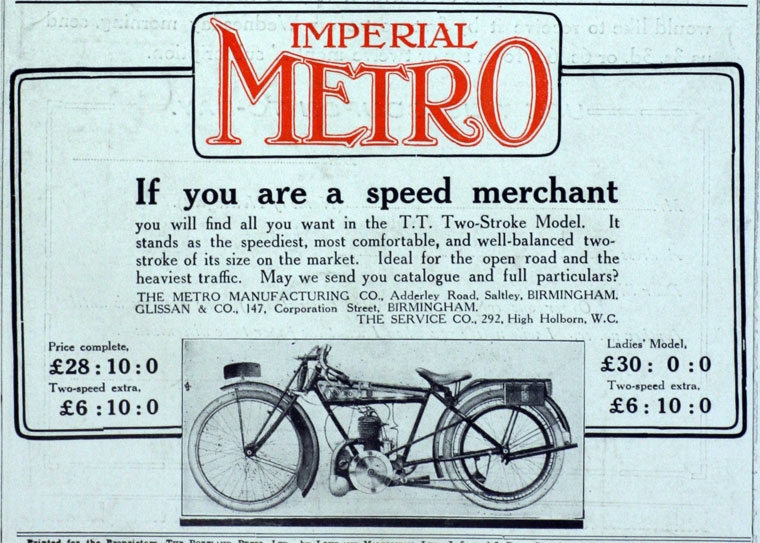
Note also Imperial Metro
1913 A 6hp V-twin model was added
to the range, which continued until 1916
A New Imperial, ridden by A. S. Jones was entered
in the 1913 Senior TT but failed to finish
1914, New Imperial produced their famous Light
Tourist model; this was only 300cc capacity, but its light weight, allied
with strong construction, enabled it to out-perform many 500 cc heavyweights
of the day.
The Light Tourist was an immediate success and
set New Imperial on the road to fame and fortune.
Post World War I. The company moved to Hall Green,
Birmingham, and added more models to their range.
1921 That year brought success in the TT when
Doug Prentice won the 250cc Junior race. Using that to advertise the make,
they increased the range still further.
New Imperial’s win in the 250 cc Lightweight
class of the 1921 TT (rider Doug Prentice came last or the finishers in
the Junior section) was certain to bring in big sales orders in pre-war
days.
This was the first of six TT wins by New
Imperial.
Mid-1920s The firm was now making its own engines
and the JAP motors became an option before being dropped.
By the mid-twenties, New Imperial were producing
around 300 machines per month. The Company continued to prosper and
grow until the depression years of the early |
 |

674cc V twin (pre '32 model 7? - 13 photo's not
published as yet)
1930 The range had been so extensive that the
firm decided to cut back and concentrate on six-cylinder models.
E A (Ted) Mellors raced the for New Imperial.
He finished in 6th. in the lighteweights, 10th in the Juniors.
1932 Major advancements were made with the first
appearance of the company's unit-construction models with the engine and
gearbox built as one unit, wet-sump lubrication and pivoted-fork rear suspension.
Throughout the early 1930s developments were
made on the sporting side and there were many successes. |
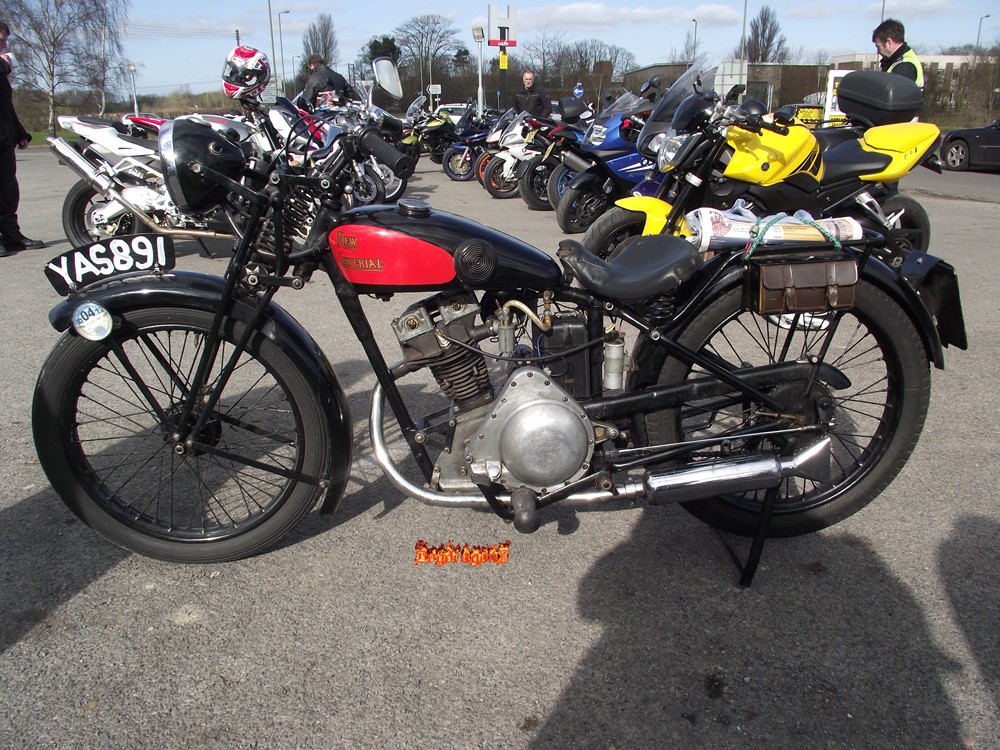
New Imperial East Coaster 150cc early 1930's
click on photo for more photo's (9 in all)
|
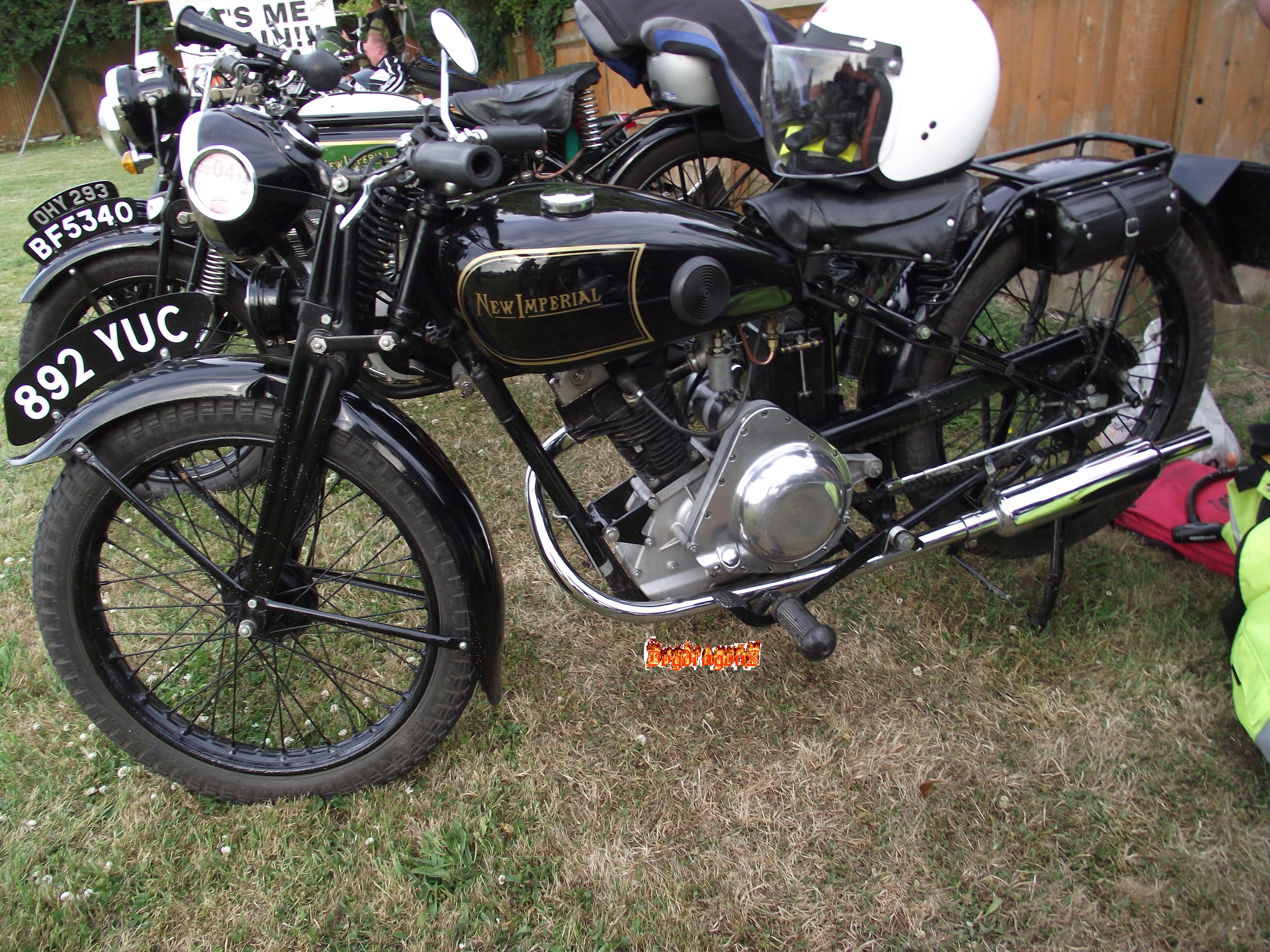
1936
click on photo for more photo's (11 in all)
|
1936 A 250cc New Imperial ridden by Bob Foster
won the Lightweight TT, the last British four-stroke to win the event.
Norman Downs died, which eventually resulted in financial difficulties.
Lightweight TT could not bring in the sales
that New Imperial desperately needed; this win was the last time that Great
Britain ever won a Lightweight TT. |

New Imperial Works racer 1936 492cc 120MPH
(clocked 115.42 around Brooklands)
click on photo for more photo's (13 in all)
1939 Following the start of World War II, on
22 September 1939 all spare parts were sold to the Colliers, of AMC, who
then appointed New Imperial spares dealers. Board of Trade records show
New Imperial Ltd officially changed their name to Clifford Aero & Auto
Ltd. 6 October 1939
Sources from several places including Wikki, Yesterdays
NL, IOMTT.com & Gracesguide
Photograph's S Broberg (aka Si Dogdragon) |

 ©2013-15